A tree too close to the house often starts as a small, harmless plant by the patio. Twenty years later, it’s brushing the gutters, dropping leaves on the roof and sending roots under the paving.
Not every tree near a house needs to go. But some do, and knowing the difference can save you a lot of worry and repair bills. Here’s how to weigh up the options.
What problems do trees close to houses cause?
The most common issues are above ground. Branches rub against roofs and walls, lift tiles, scratch metal sheeting and block gutters with leaves. In storms, they can whip against windows or drop onto the roof.
Below ground, roots may lift paths, crack paving and find their way into leaking pipes. In some soils, large trees can also contribute to soil movement near footings, especially if they draw a lot of moisture.
There’s also the question of what happens if the tree fails. A large tree within falling distance of a bedroom is a different risk from one at the back of a big block.
When is pruning enough?
If the tree is healthy, well structured and mainly causing problems with branches, pruning is often the answer. Clearance pruning can lift the canopy away from the roof and gutters, while crown thinning reduces weight and wind load.
Pruning works best when the tree has room to grow in other directions. If it’s healthy and the roots aren’t causing damage, there may be no need to remove it.
When is removal the safer option?
Removal makes more sense when:
- The tree has structural defects, such as cracks, decay or weak unions
- It leans towards the house and the lean has increased
- Roots are damaging pipes, paving or structures and can’t be managed
- The species will grow far too large for the space
- Repeated pruning is needed just to keep it off the roof
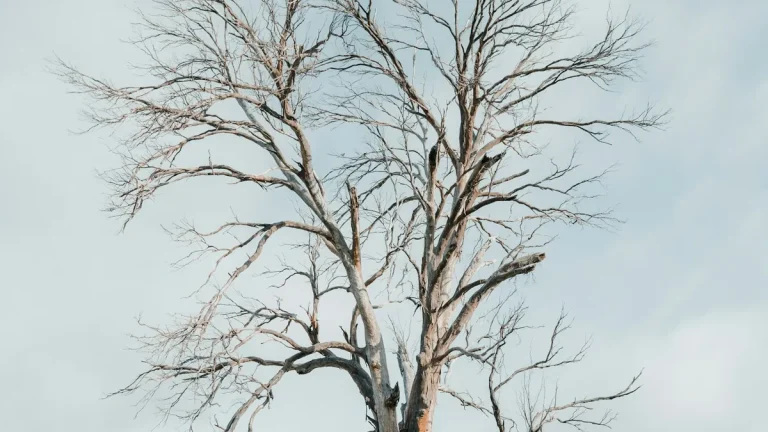
- It’s dead or in serious decline
In these cases, continuing to manage the tree often costs more over time, and the risk stays.
How close is too close?
There’s no single rule, because it depends on the species, its mature size, the soil and the building. A small tree two metres from the house may be fine, while a large eucalypt at the same distance could be a long-term problem.
As a general guide, think about how big the tree will eventually be. If its mature canopy will spread over the roof, or its height is greater than its distance from the house, it’s worth getting professional advice.
How are trees near houses removed safely?
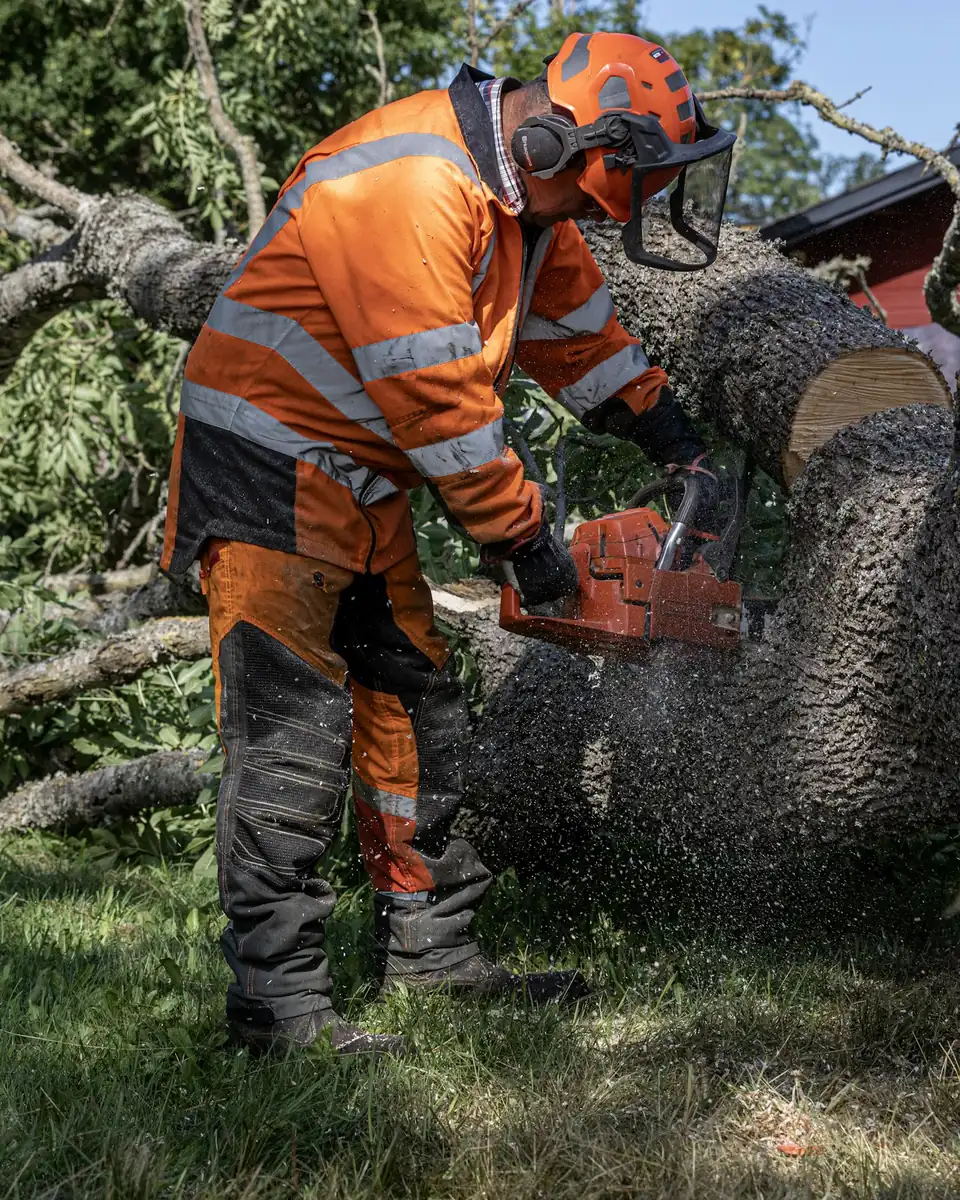
Trees close to buildings are rarely felled in one piece. Instead, they’re taken down in sections, starting from the top. Branches over the roof are tied off and lowered on ropes, so nothing lands on tiles or gutters.
On larger trees, a crane may lift sections over the house to the street. The method depends on the tree’s size, condition and the space available.
What about the roots after removal?
Once a tree is removed, its roots stop growing and slowly break down. Grinding the stump removes the main root mass near the surface. Larger roots under paving or near footings are usually left in place, as digging them out can cause more disturbance than leaving them.
If roots have already damaged pipes or paving, those repairs can be planned once the tree is gone.
Can you plant something else instead?
Yes, and it’s often a good idea. A smaller tree or large shrub planted at a sensible distance from the house can give you shade and privacy without the same problems. Choosing a species with a modest mature size and non-invasive roots makes all the difference.
What questions should you ask before deciding?
Ask how big the tree will get, whether it has any visible defects and how much pruning it will need each year to stay clear of the house. Also ask what would be affected if it failed. Clear answers to these questions usually make the decision much easier.
You may also find this guide helpful: Tree Roots Lifting the Driveway: Remove the Tree or Fix the Paving?.
What else do people ask?
Can tree roots damage my house foundations?
In some soils and situations, large trees can contribute to soil movement near footings. An assessment can help you understand the risk.
Is it better to prune or remove a tree near the house?
If the tree is healthy and well structured, pruning may be enough. If it has defects or will outgrow the space, removal may be safer.
Will removing a tree damage my roof?
Not when it’s done properly. Branches over the roof are lowered on ropes rather than dropped.
How far from the house should I plant a tree?
It depends on the species’ mature size. Choose smaller trees for spots close to buildings.
Do I need permission to remove a tree near my house?
Some councils protect certain trees. Check with your council before work begins.
Worried about a tree near your home?
Call Pro Tree Works on 08 6279 4835. We’ll assess the tree, tell you honestly whether pruning or tree removal near the house is the better option and give you a written quote.